Targeting Algorithm for Bag Dispenses

Project Goals

  1. Predict how a stock item would fall into a bag given its physical properties and dispense speed.
  2. Find ways to avoid item collisions with each other or with bag walls.
  3. Implement an efficient instance of the algorithm to be run in less than 10ms.

Empirical Data Collection

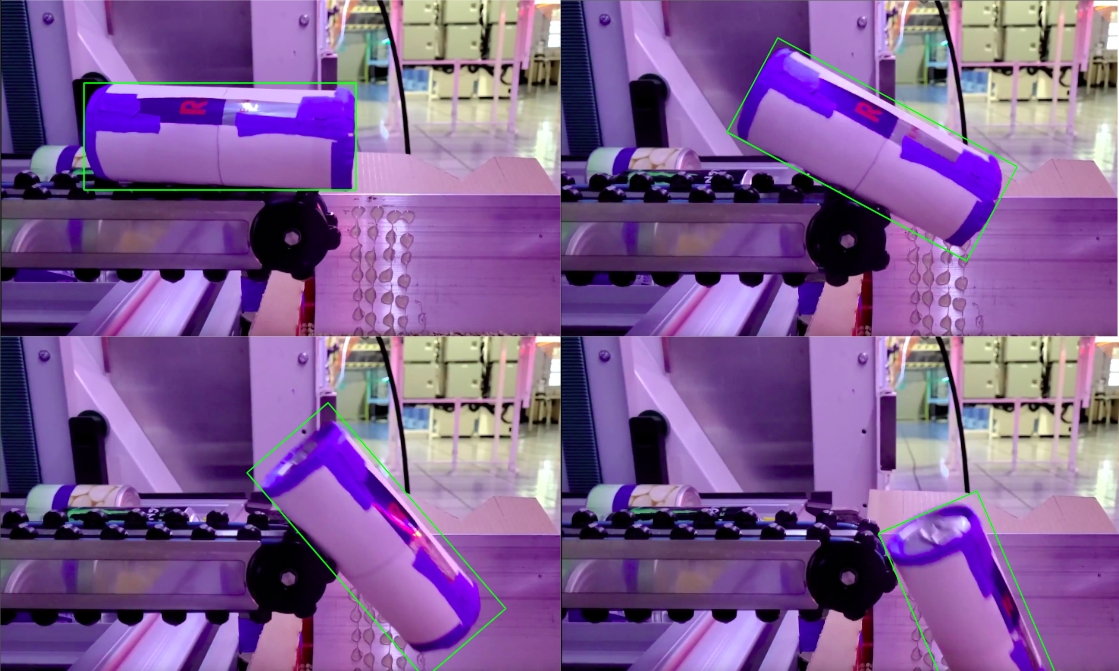
A dozen items were dispensed at different speeds and heights and the landing distance was recorded each time. This was done into a granular media to absorb the impact energy.

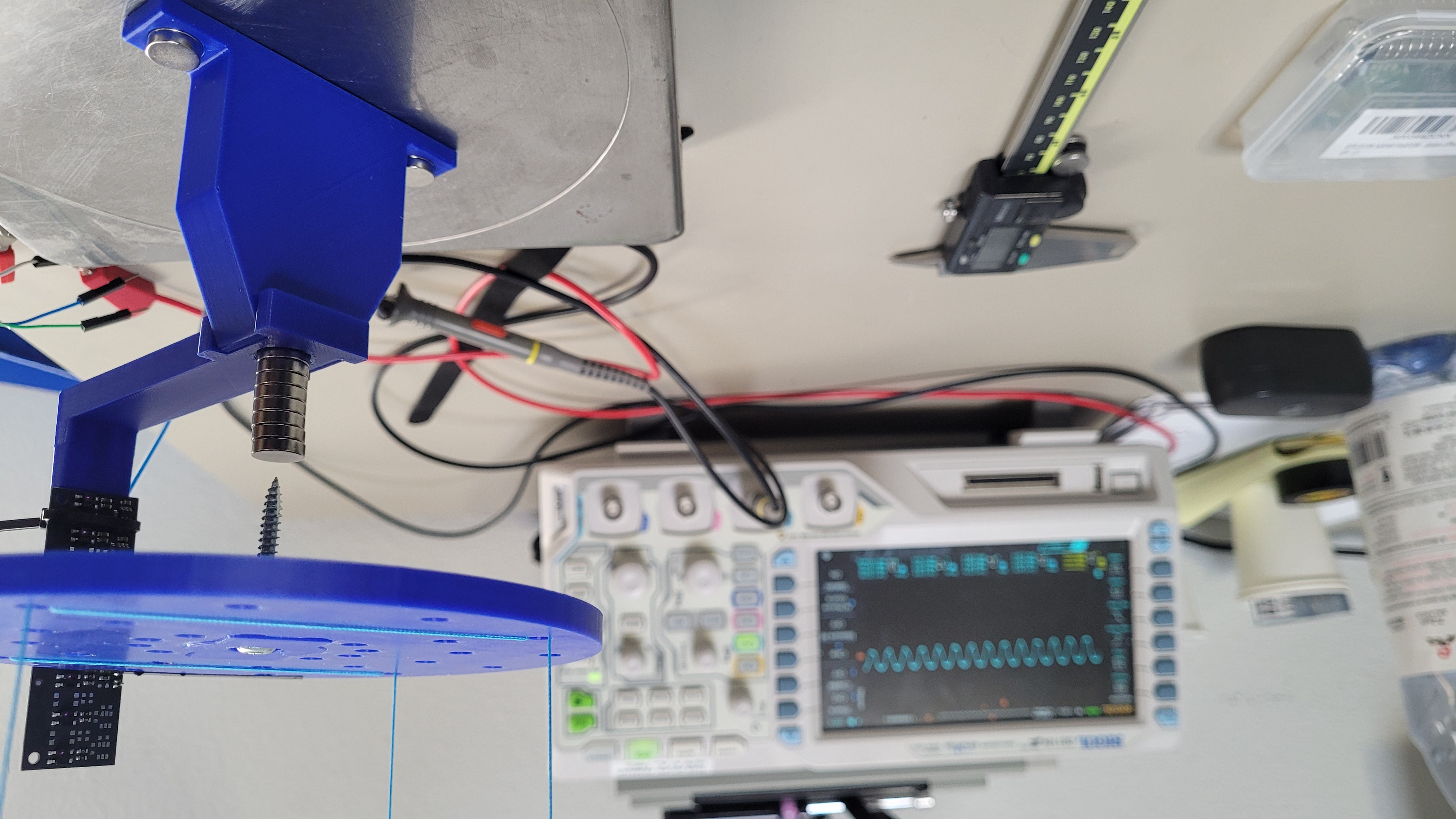
Each item was weighed then placed on a custom torsional pendulum to determine its specific moment of inertia.
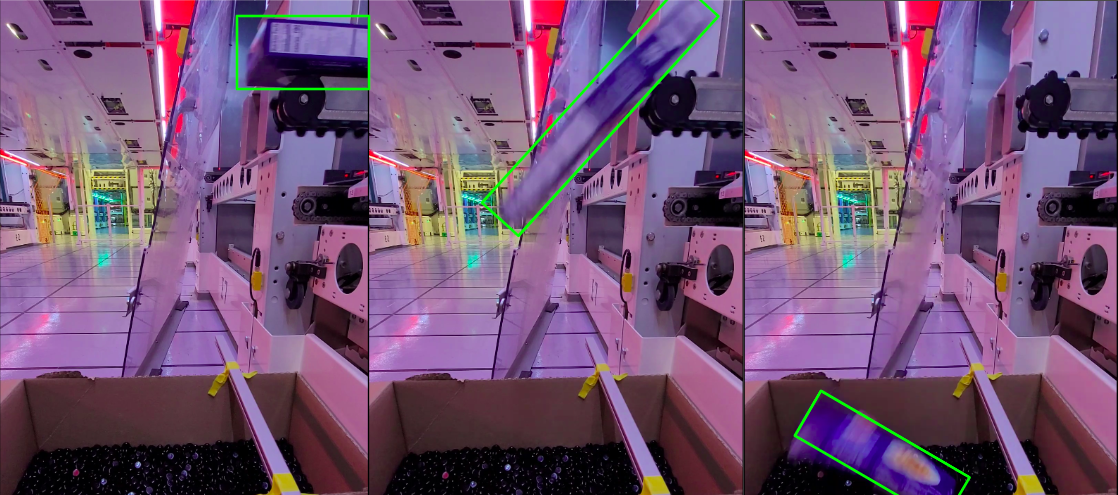
Tracking the motion of a pasta box as it falls into a granular media.

Using a 3D printed torsional pendulum to measure moments of inertia of items.

A red bull can dispensed at a lower speed shows more pronounced slipping.

Developing a Physics Model

Every dispense problem was abstracted to a rectangle rolling off the edge of a spinning disk, with the exception of spherical items.

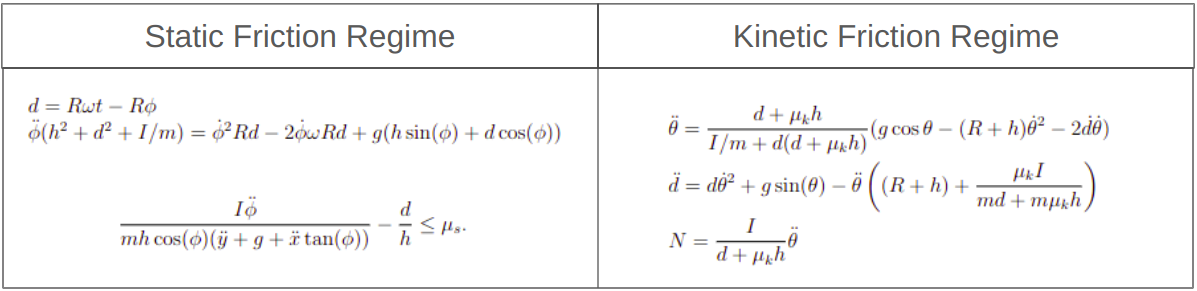
Composed of both a static and kinetic friction regime, the model accounted for stick-slip interaction between the item and the conveyor.

Dynamic equations were derived through the use of Lagrangian mechanics.

An FBD of a prismatic object being dispensed at a constant speed.

Static friction and kinetic friction regime dynamics.

Model Verification with Simulations

The physics model above was verified in 4 different ways:

  • SolidWorks Motion Studio
  • Python numerical integration using Scipy
  • MuJoCo toolbox and URDF descriptions
  • Direct comparison against empirical data

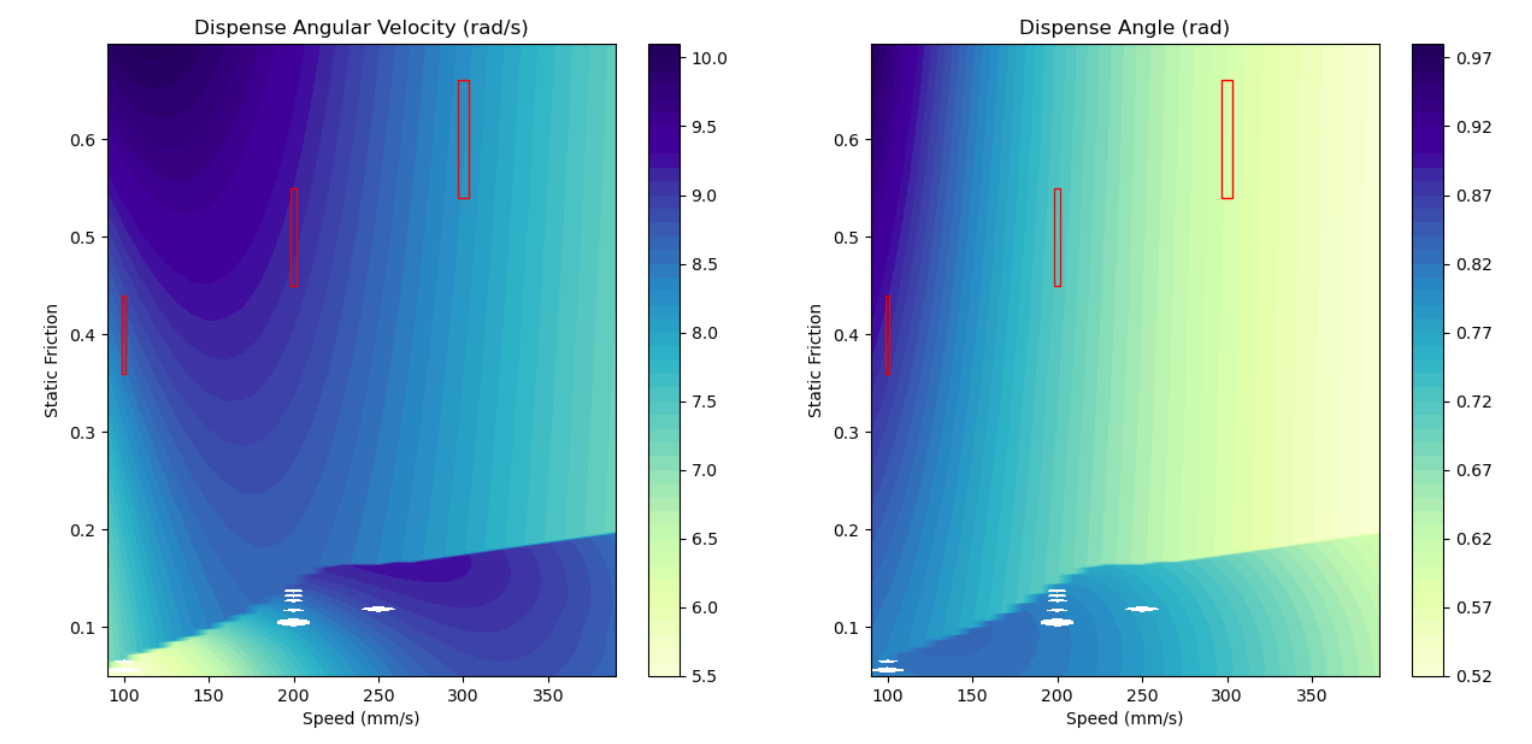
Chaotic behavior was detected through the use of bifurcation diagrams and varying theoretical friction coefficient values.

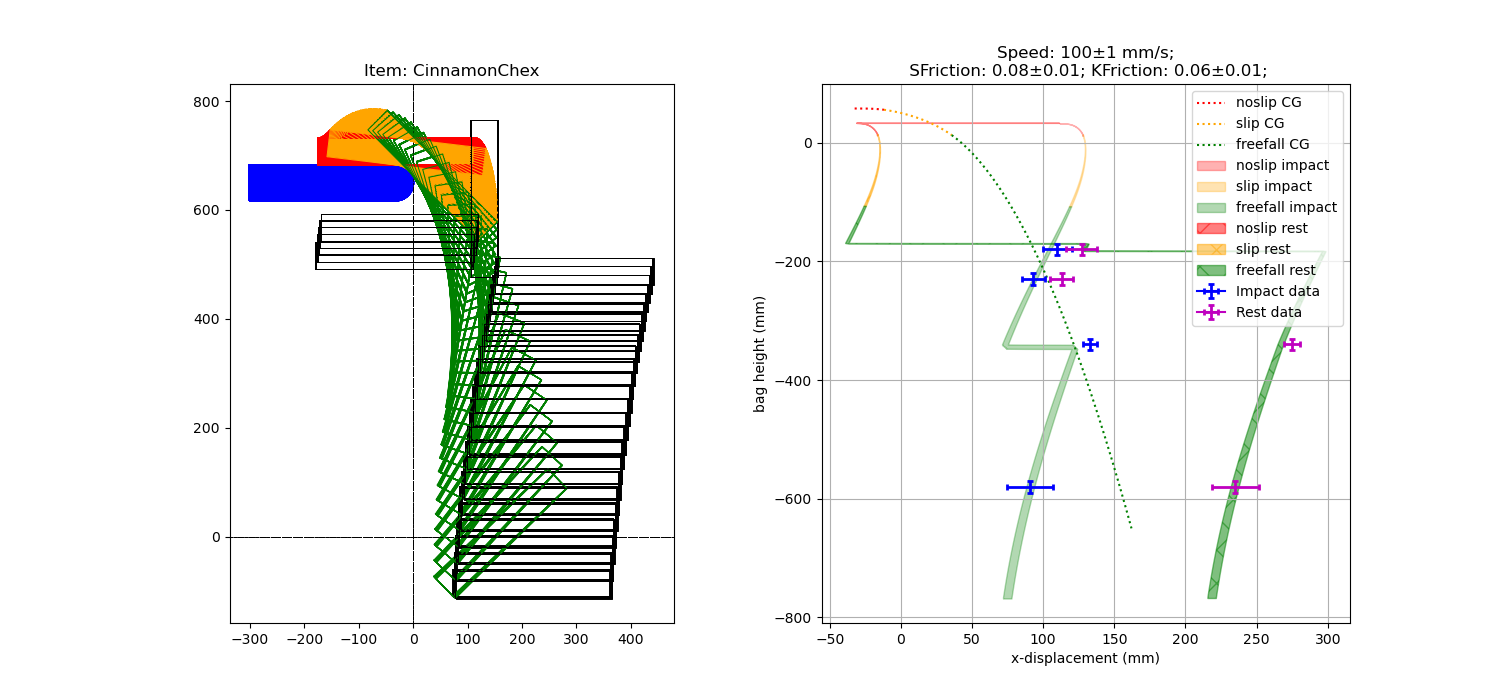
There was strong agreement between the model and data, but liquid containers showed the most deviation from theory.
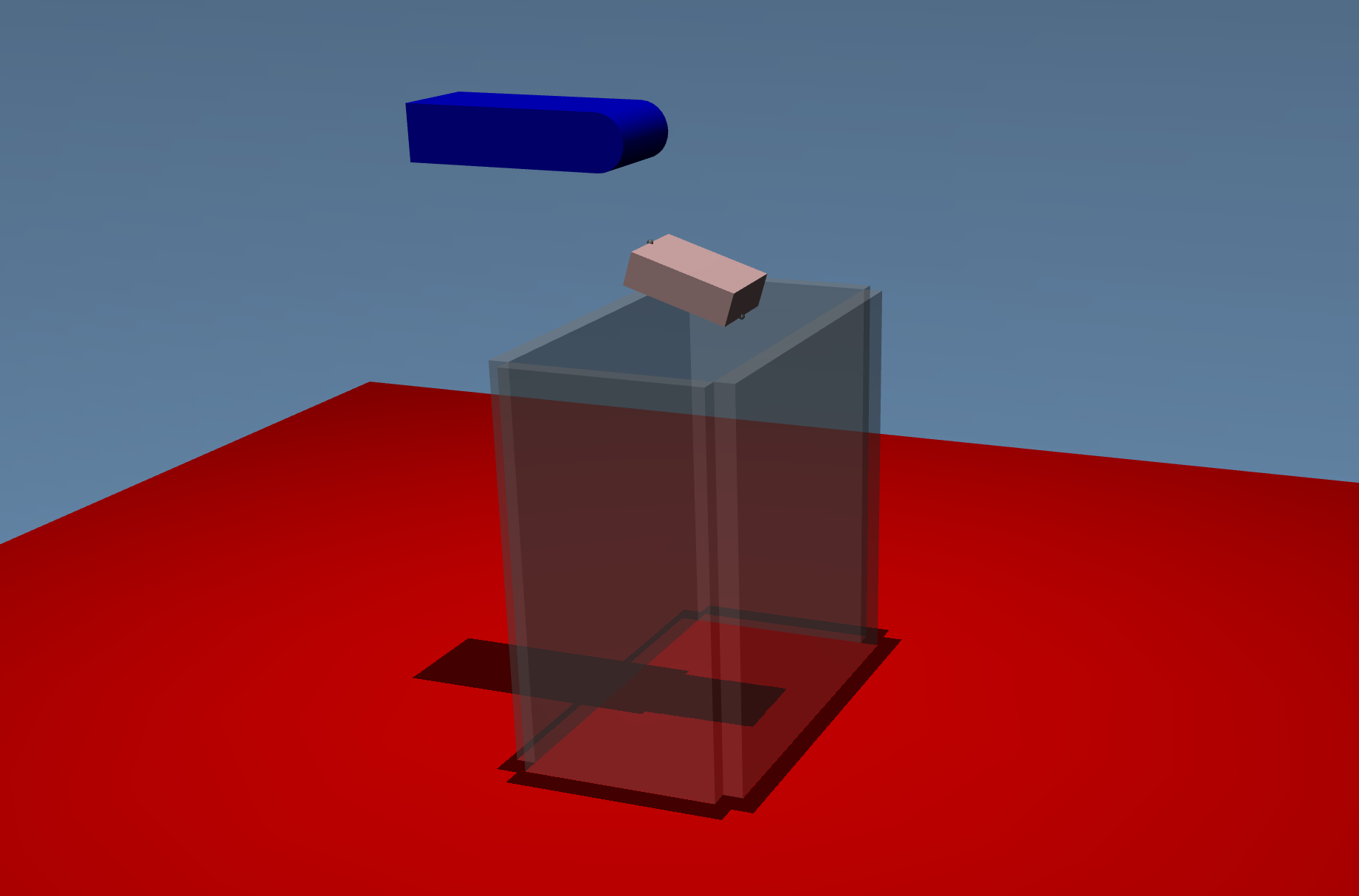
Using MuJoCo to test virtual dispenses and compare to analytical solutions.

Verifying a Python probabilistic physics model against empirical data.

Checking model continuity, also notice the bifurcation at low friction values.

Timing Belt Joining Bead

Project Goals

  1. Design a compact joining bead for use with rubber-coated nylon rope, for both ambient and freezing temperatures.
  2. Increase joining bead tensile strength from 15kg to 30kg to improve component lifetime.
  3. Reduce manufacturing and assembly costs through an in-house additive manufacturing approach.

Assessment

Reasons for component failure:

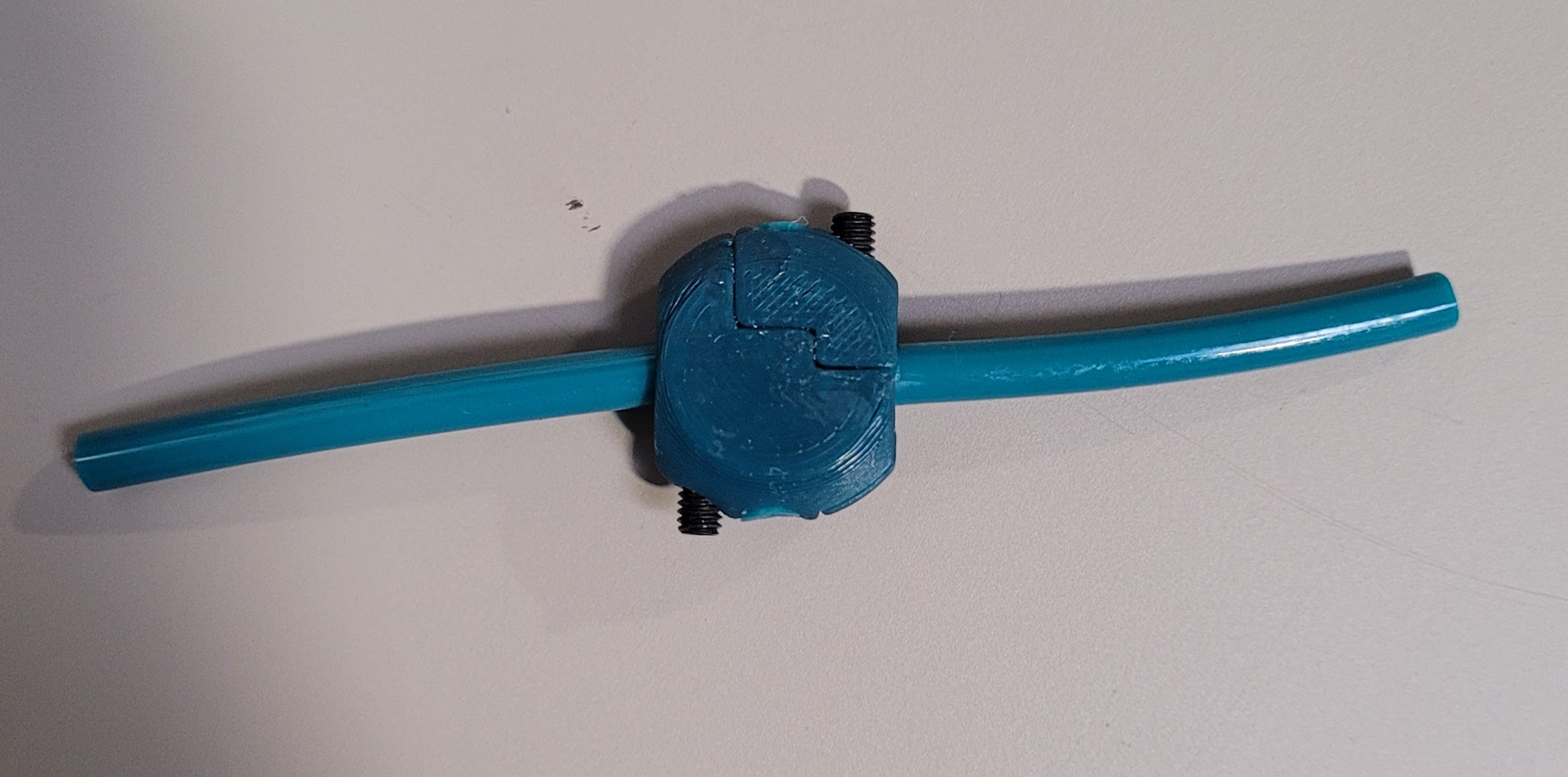
  • Set screws used to hold the ends together inside the joining bead would instigate fractures under high tensile loads.
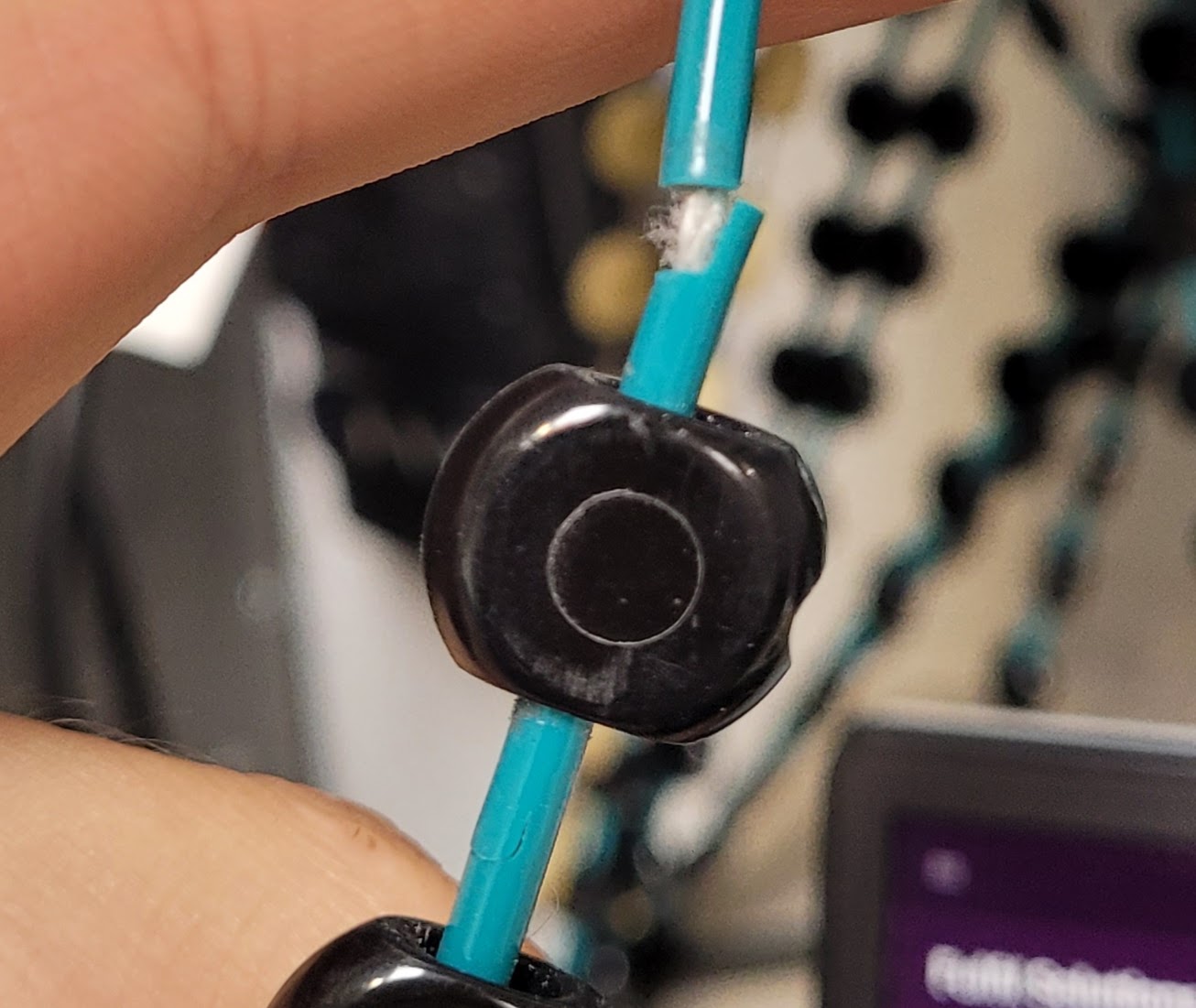
  • The inner nylon cord would slip inside the polyurethane sheath.
  • Adhesion surface area was too small due to space constraints.

Cracking due to temperature-induced stresses and cyclic fatigue.

Using set screws as crimps - 100N capacity.

Iterative Design

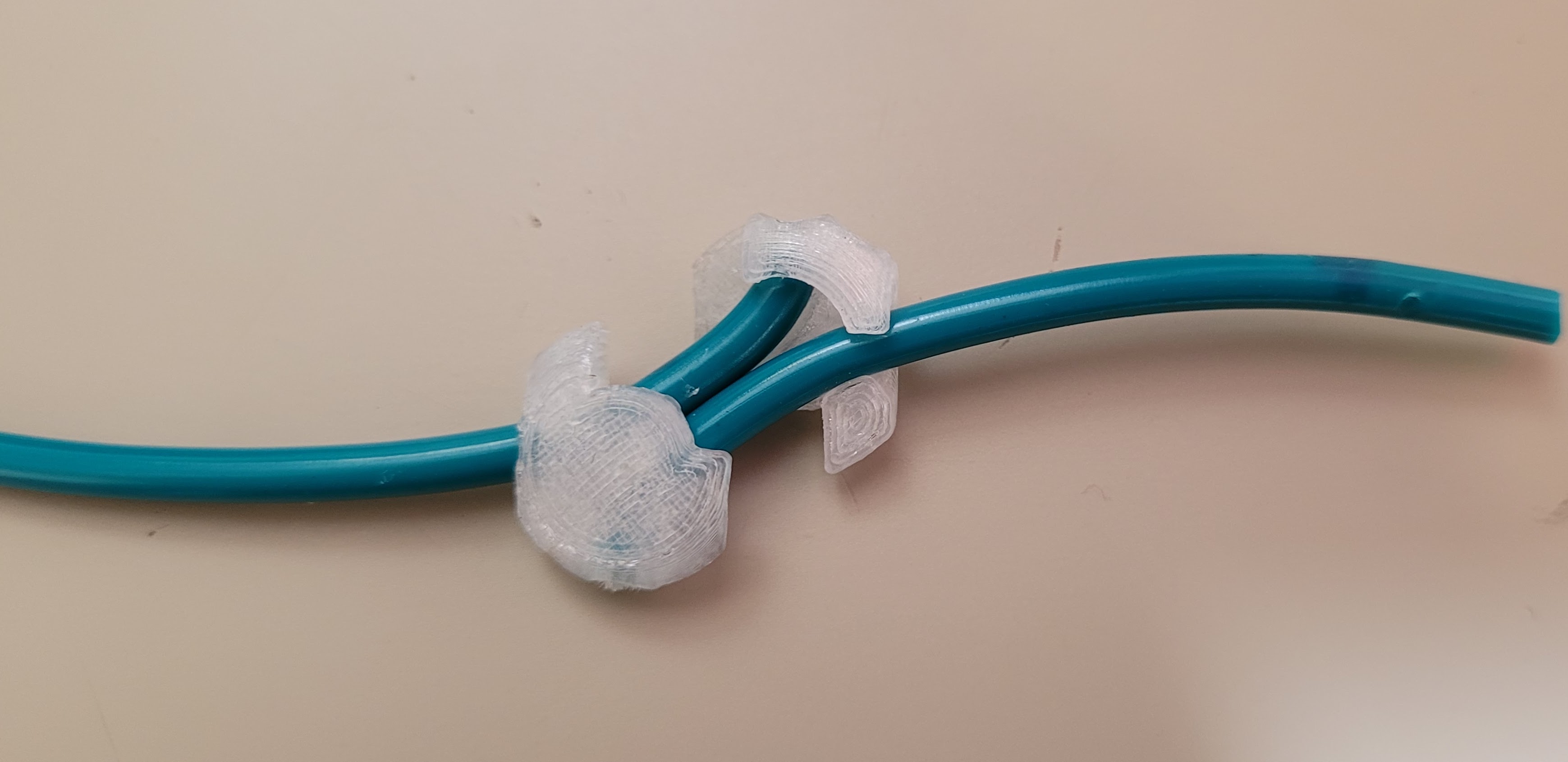
Concept # 1: Using set screws to fasten against the belt ends, but this failed due to adhesion limits.

Concept # 2: Using internal capstan friction by way of wrapping the cord ends inside the bead, but this too failed due to layer separation.

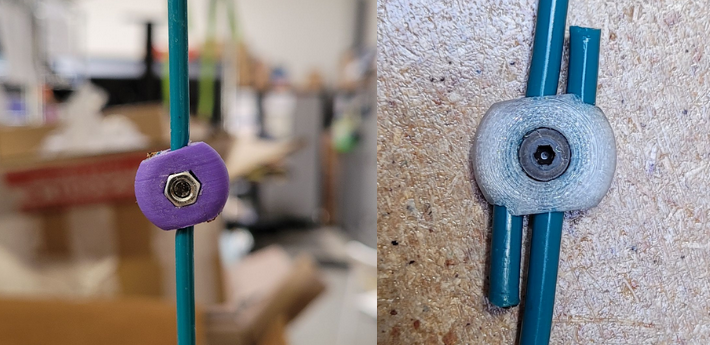
Concept # 3: Relying on bolt compression against the internal bead walls to compensate for the cord's elastic deformation under tension.

Using capstan friction - 150N capacity.

Using bolt compression and hoop stress - 220N capacity.

Conclusion

The bead lifetime exceeded 4 months of continuous operation in freezing temperatures, marking a ~300% improvement.

Hot Knife Apparatus

Project Summary

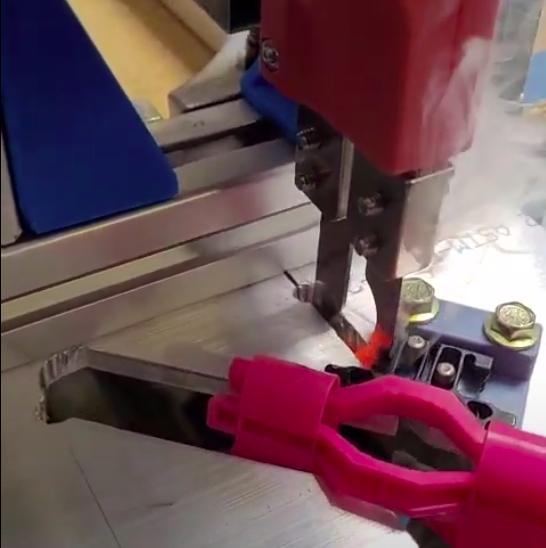
There was a need to add chamfers to 3000 injection molded tongue pins without ordering an additional mold, and a hot knife jig was discovered to be the most efficient tool for the job.

Apparatus Description

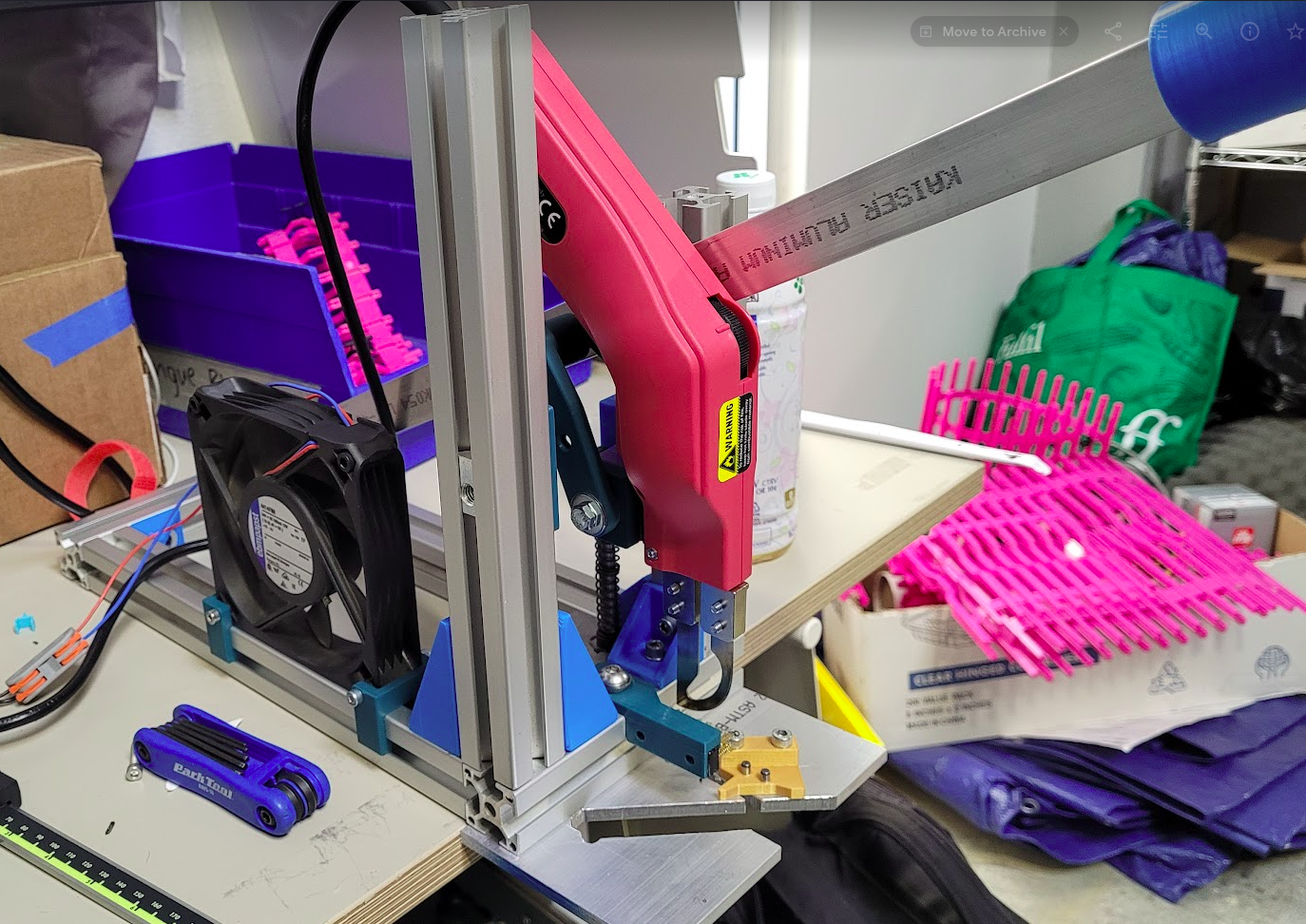
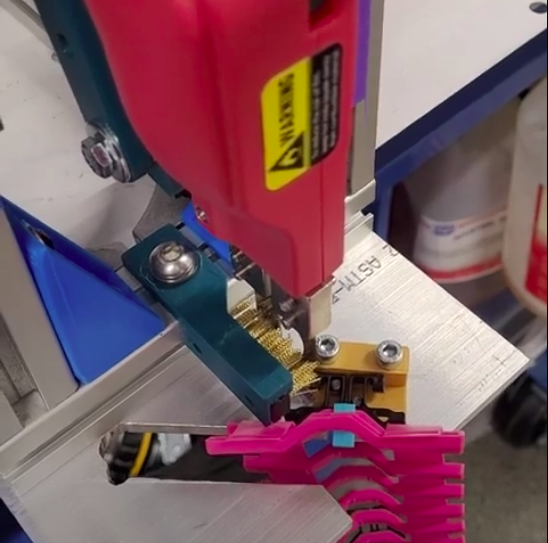
Precision: the plastic part is located underneath the blade with metal dowel pins.

Ergonomics: a lever allows the operator to adjust blade temperature and cutting speeds in a single stroke.

Efficiency: a metal brush makes the knife self-cleaning and ready for the next cut.

Safety: a blade guard keeps fingers out and a blower fan diverts toxic gasses away from eyes.

The benchtop-mounted hot knife jig is equipped with a fan to divert toxic fumes.

Lowering the handle triggers the hot knife and heats up the blade as it sinks into the platic part.

Raising the handle causes the blade to clean itself of plastic residue against the metal brush.